


Daylong Walking Tour of Old Dhaka
$60 per person
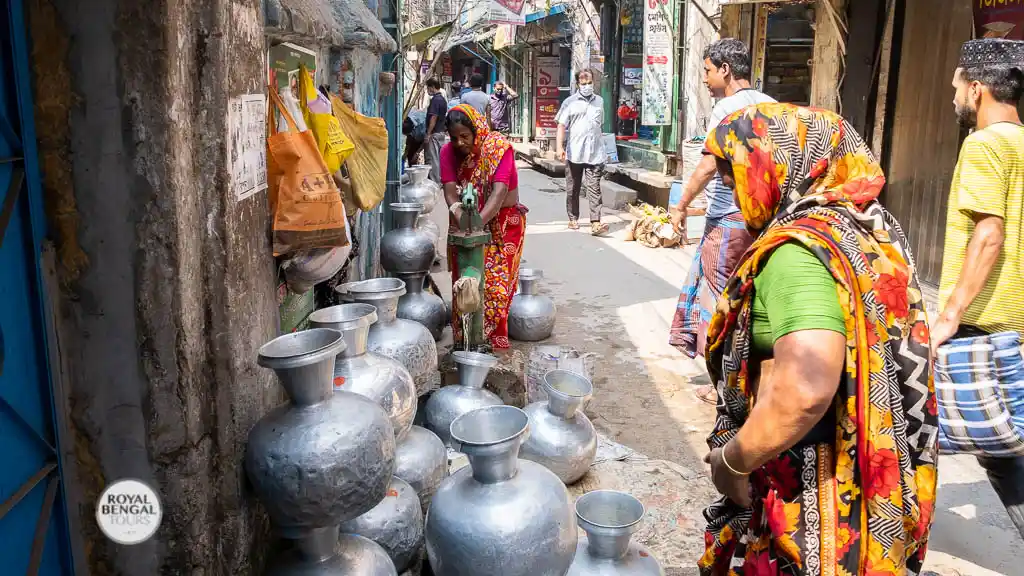
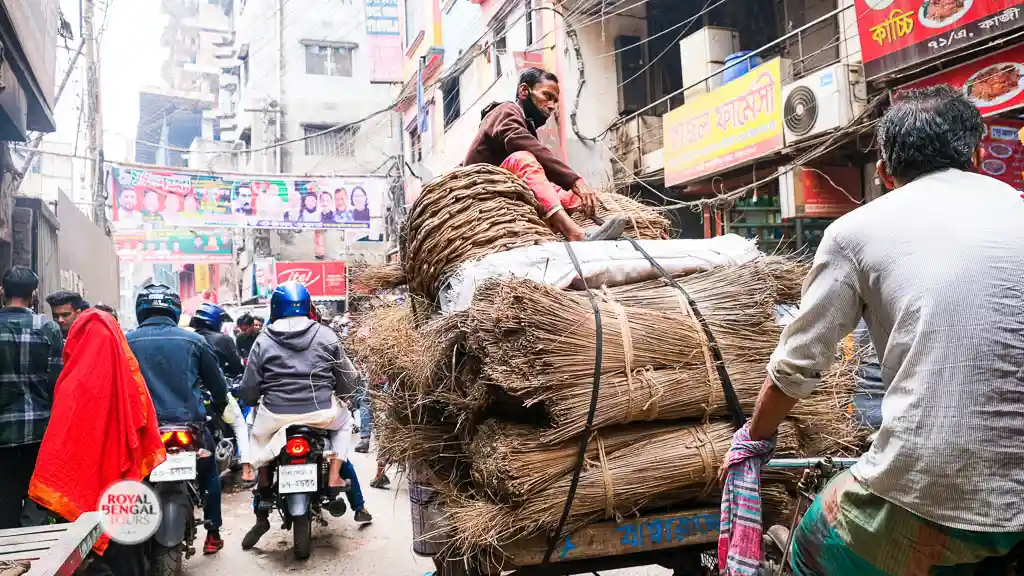
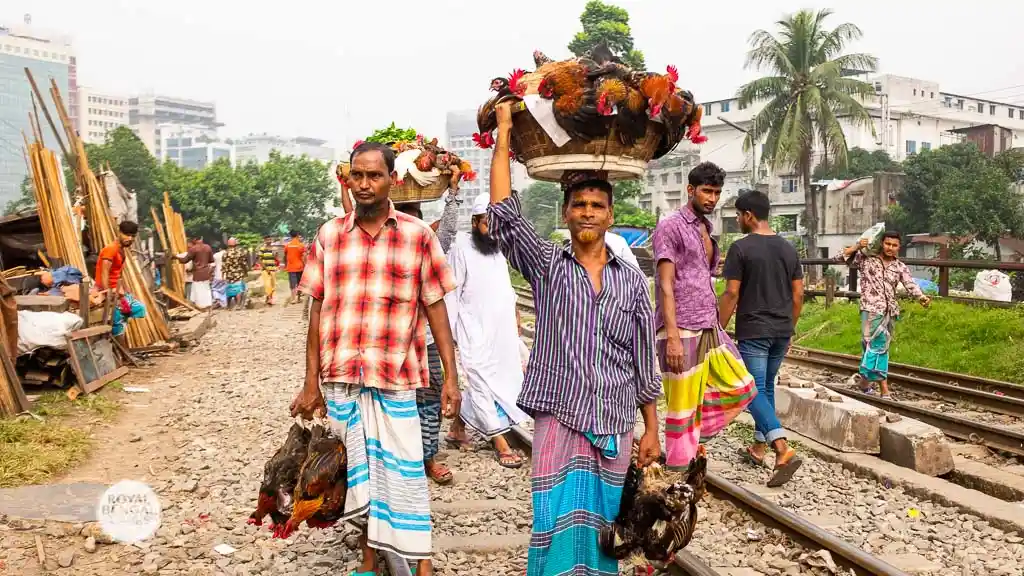
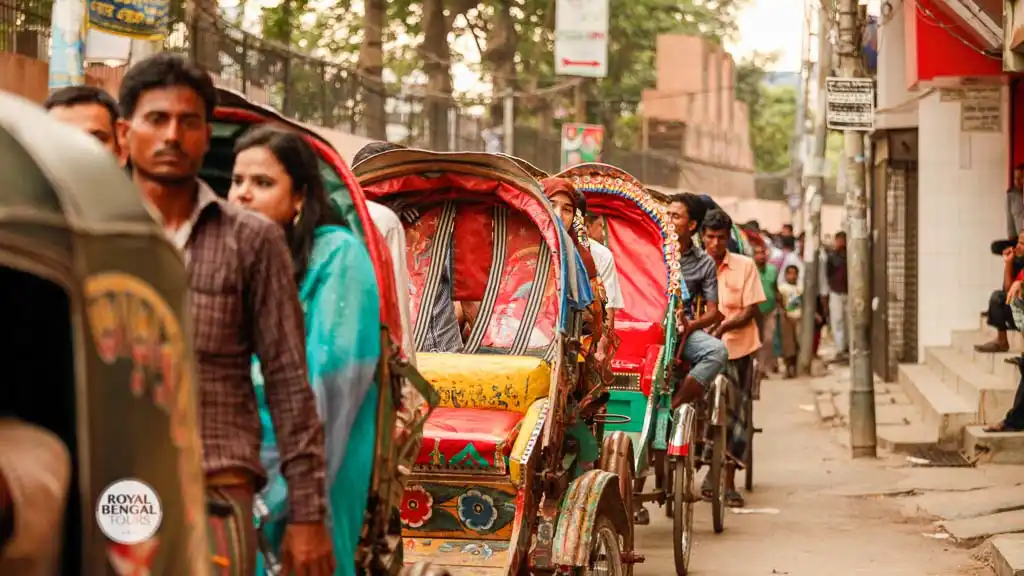
The daylong Old Dhaka walking tour walks through the mysterious heritage and the streets that are not yet mentioned in any travel guide, and an individual will not find those secrets by themselves. Puran Dhaka (Old Dhaka) is dirty, messy, and crowded, but that is part of its charm. Colorful rickshaws abound at every corner, and kids play cricket wherever they can. Mosques call for prayer, and shingara merchants often offer tourists free shingara or puri.
Probably the world considers today’s Dhaka as a most chaotic and densely populated city; maybe the density is her strength, and chaos is the rhythm of life. Dhaka has an exciting history and rich cultural heritage and has a name for its exotic culinary and cuisine.
In the early 17th Century, Dhaka became the Mughal capital of Bengal. These walking excursions feature Mughal caravansaries, palaces, and bazaars. Many Hindu and Armenian businessmen became wealthy and built colonial homes along the Buriganga River. Dhaka was one of the major and important cities on the Indian subcontinent.
Couldn’t stand for that long. Dhaka’s population and power dropped after the British took over Bengal in the mid-18th Century, whereas Calcutta thrived. In 1824, a visiting Anglican bishop from Calcutta named Dhaka a city of “magnificent ruins.”
After India and Pakistan split in 1947, most Hindu merchants fled, leaving their homes and properties behind. And the wealthy Armenian community of 300 families died or left. This tour walks inside the courtyards of beautiful old merchant residences to meet the families living there. Bright saris hang on elegant, rusted fences. Kids play hopscotch in front of chipped colonnades. An 18th-century Armenian church and a 1600 Christian cemetery are two peaceful havens in Puran Dhaka. The tour includes a short break for Bangladesh’s wonderfully sweet tea and lunch at a local eatery.
One of our tours takes the group through the 400-year-old Chawkbazaar, a tangle of street market stalls selling everything from electronics to sweets. The Barakatra used to be the tallest building in Dhaka. It had 22 shops and was a well-known grand inn for merchants who came to the city in the 17th Century. Only approximately half of the Mughal buildings are still standing, and even a public toilet has been cut into a building.
You can still stand at one of the two remaining gateways and imagine trading caravans passing through the area.
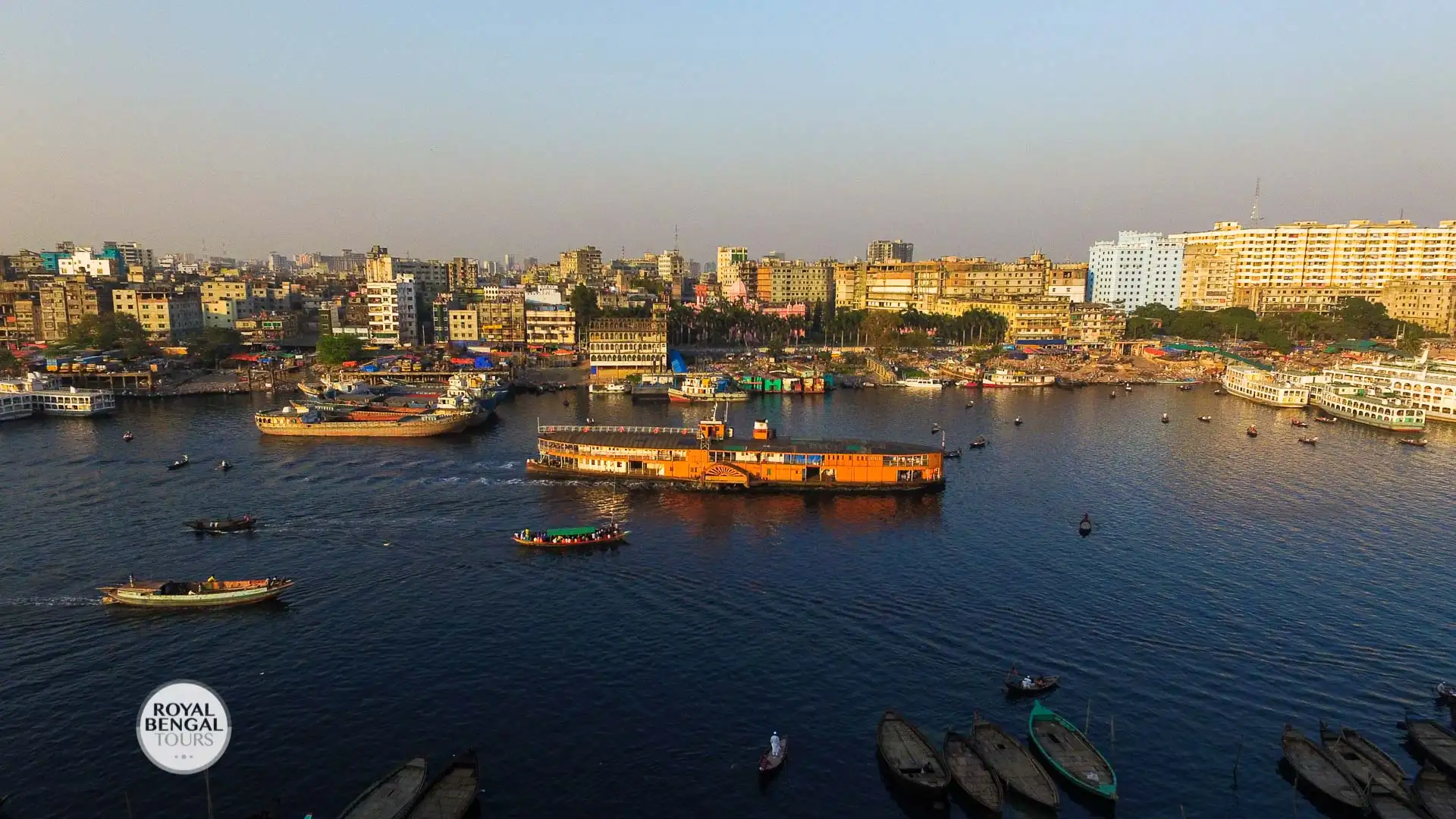
Tours stop at Buriganga River, “Dhaka’s beating heart.” On one of our tours, we take you to a rooftop overlooking the river to witness little wooden boats ferrying people and goods.
We aim to take the challenge of restoring Dhaka’s heritage buildings and attracting local and overseas tourists. Dhaka’s population has grown from 6.5 million in 1990 to 18 million in 2022, with many living in slums. The city’s overcrowded infrastructure needs upgrading. More than 20% of the city’s boxy, concrete buildings would collapse if a magnitude 7 earthquake hit.
A daylong walk of Old Dhaka is not enough to learn all its maze and charisma. One can spend a couple of days walking through the different streets, taking pictures, meeting super friendly people, exploring local craftsmanship and recycling industries, and experiencing the authentic culture and delicious foods. We try to skip museum visits on this trip to stay focused on daily life activities on the streets and cultural engagements.
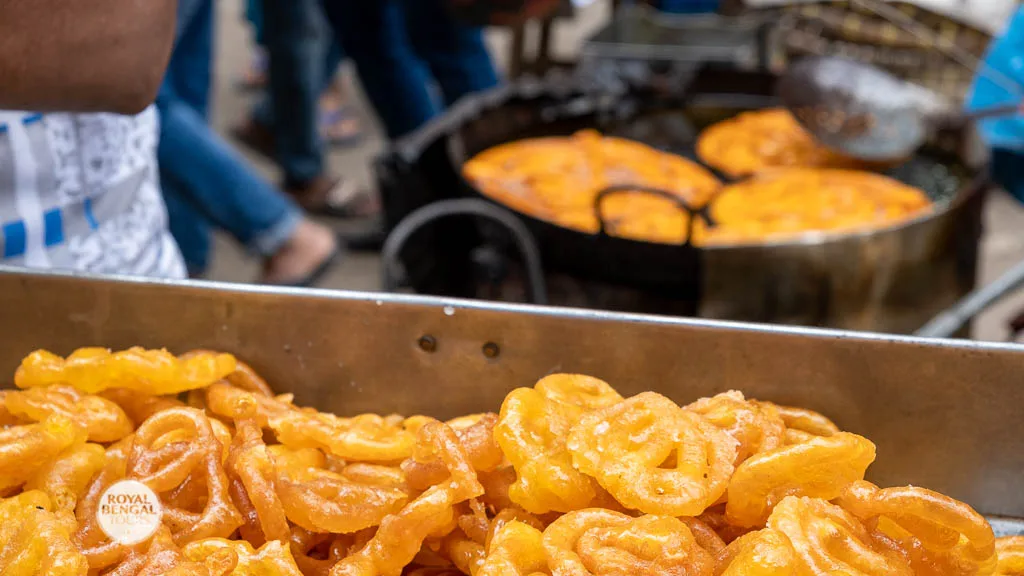
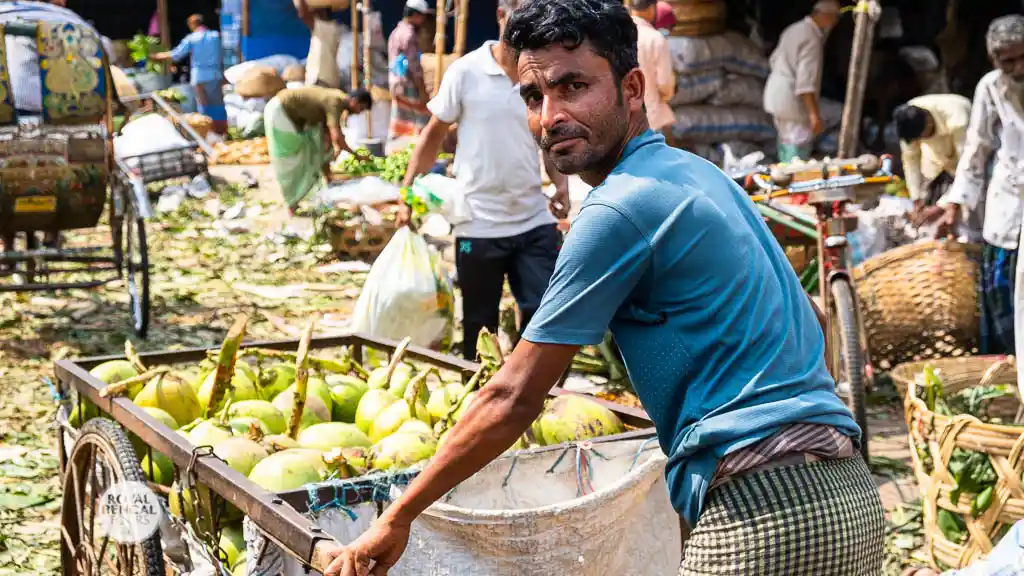
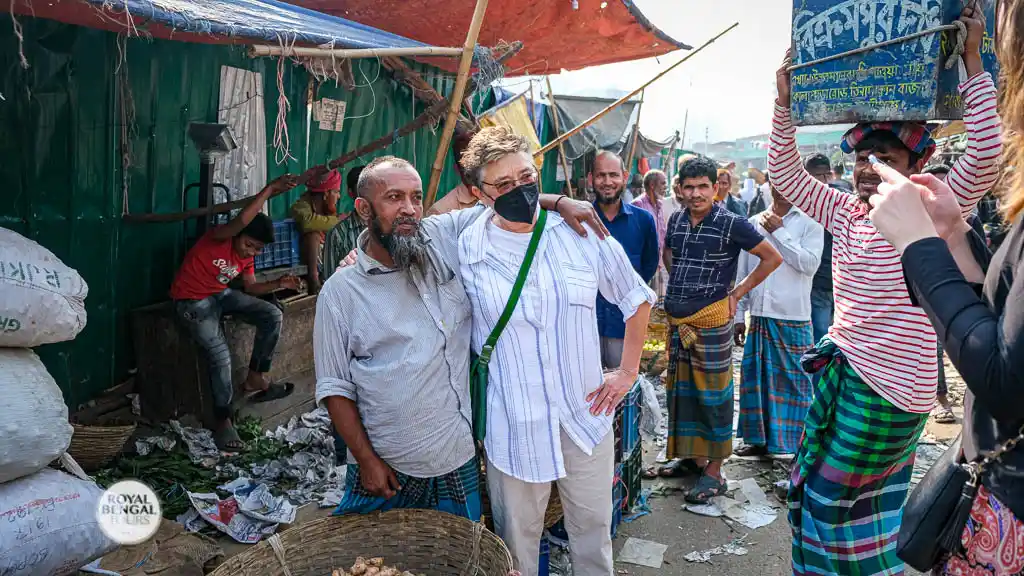
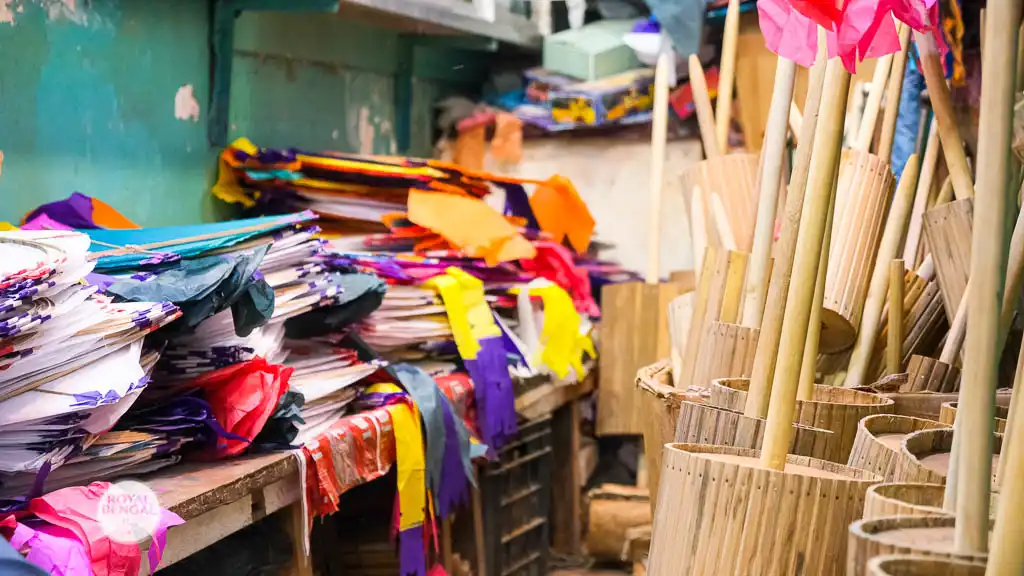
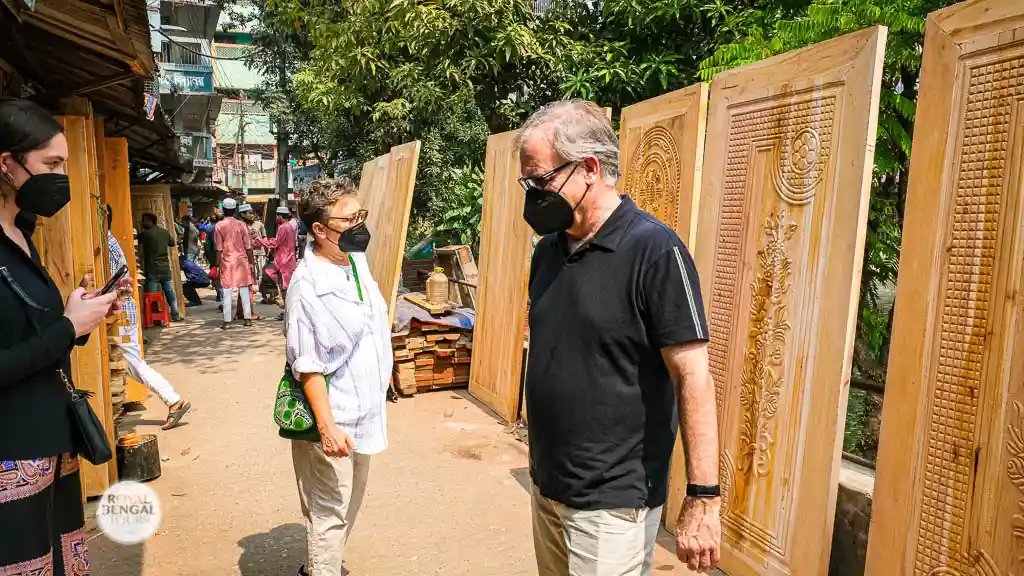
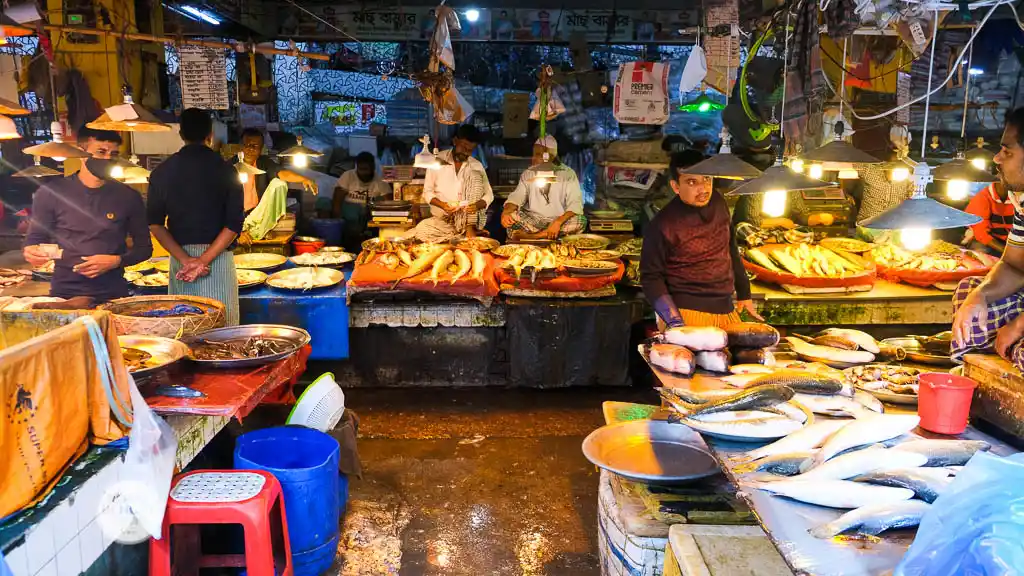
An expert guide and driver will come to pick you up at 8AM from your hotel or residence and drive to Kawran Bazar. This is one of the largest marketplaces for vegetables, fruits, fish, meats, and many other products. About an hour’s walk through this chaotic market is fascinating. Continue driving to Dhaka Art School and the lively campus of the University of Dhaka. Here we start our old Dhaka street walk through Kazi Alauddin Road, Bongshal cycle street and residential area, Carpenter Street, Pakistan Maat, Koshaituli Old Mosque, Noya Bazar, Tanti Bazar, and Shakhari Bazar Hindu streets, and end up in Sadarghat riverfront. This walk is an opportunity to meet many small and cottage industry artists, visit local families at their heritage homes, and, of course, check out some special snacks.
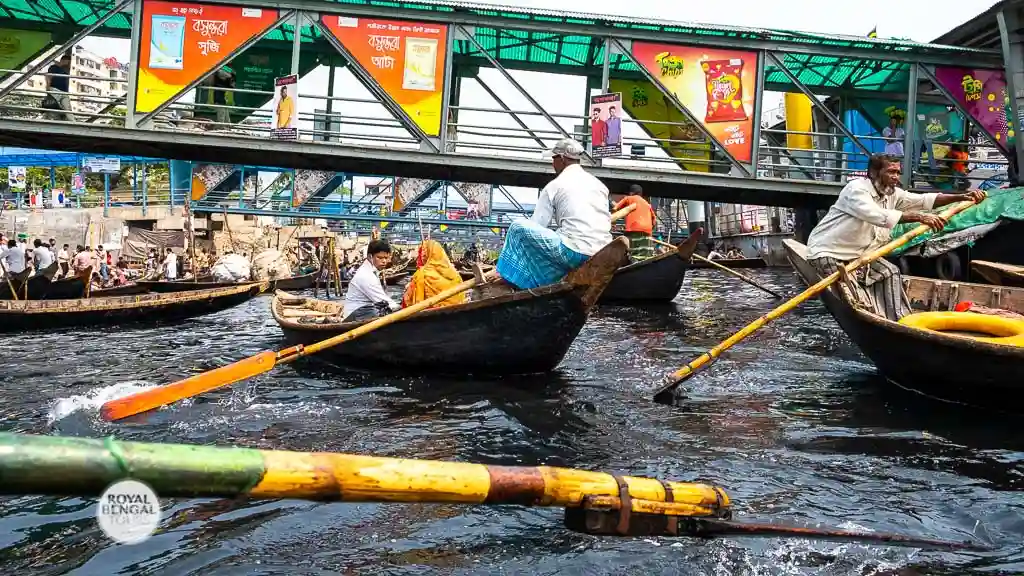
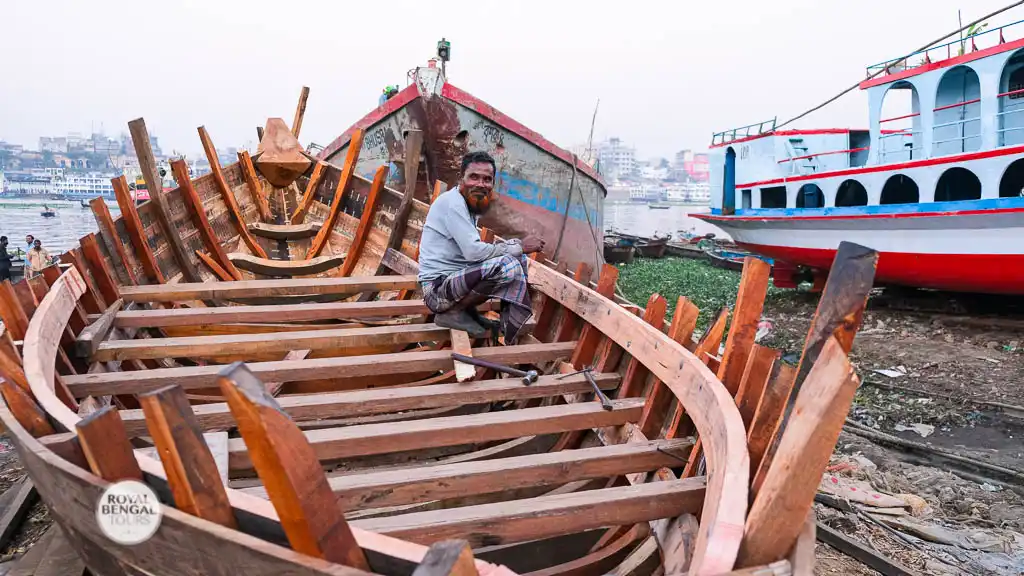
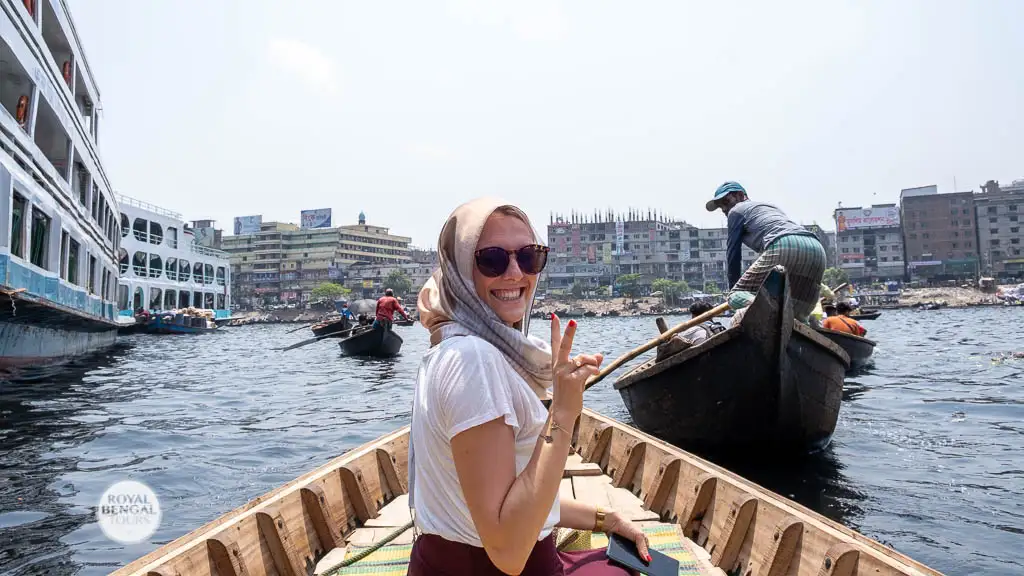
Your guide will take you on a short, scenic boat ride along the Buriganga River in a traditional country boat. Witness the fascinating recycled shipbuilding industry, where skilled artisans craft massive vessels entirely by hand—without modern tools or machinery.
Enjoy a memorable vegetarian lunch at a heritage restaurant that once served as a gathering place for artists, intellectuals, historians, and elites during the era when Old Dhaka was the capital of Bengal. This hidden place is nearly impossible to find without local expertise, and its authentic Bangla cuisine is truly exceptional.
Alternatively, you are welcome to try Dhakaiya biriyani from some of the most famous spots in Old Dhaka. If you’d like to enjoy a combination of biriyani, naan, kebabs, and curries, simply let your guide know—we love sharing the rich and diverse food culture of Bangladesh! As you explore through the historic streets, admire the ornate architecture and fascinating cultural heritage of Old Dhaka.
If you would like to meet one of the last remaining rickshaw painters, we can arrange this for you. Please inform us in advance so your guide can plan a visit to the artist’s home studio along the way. Rickshaw painting has adorned the streets of Bangladesh as vibrant, moving art galleries for more than a hundred years and has earned recognition as a UNESCO Intangible Cultural Heritage. What was once a thriving industry is now sustained by only a few elderly painters who continue their craft out of passion. The future of this art form is uncertain, making this a rare opportunity to own a piece of Dhaka’s living history. If you wish to purchase a rickshaw painting, please discuss it with your guide so that we take you to the right artist based on your preferences—each painter has a unique and distinctive style that reflects the essence of this naïve art.
Continue walking through the Burigonga River bank to the Armenian Church and visit the Star Mosque and Nawab Bari Pond on the way. If we are allowed by the time and are still energetic enough to explore more. In that case, we will take you to various recycling hubs of the old town and then drive back to your hotel or residence. We will be using rickshaws and boats for experience and convenience; there will be a reserved vehicle for long-distance transfers. You will be arriving home late in the afternoon or early in the evening.
We may not visit any museums or famous tourist sites on this trip today. Old Dhaka has a lot to offer every day, with much to see along the backstreets, bazaars, local people, and their daily actions of life. These are more interesting than the known places, and this trip requires physical ability to walk 3-6 hours.
- Tour Price
- $ 60
price starts from
-
Group Size Per-person price in USD Or in BDT 1 PAX $150.00 18,000.00 2 PAX $90.00 10000.00 4 PAX $70.00 8400.00 6+ PAX $60.00 7,200.00
- Reserved vehicle and driver
- A knowledgeable English-speaking guide
- A memorable lunch at a traditional heritage restaurant and tastings of authentic local snacks from renowned eateries along the route
- Bottled water, soft drinks, tea seasonal fruits and old Dhaka special snacks
- All entrance fees and necessary permits
- All local transports, including rickshaw, boat rides and so on
Personal expenses, gratuities, and any activity not specifically mentioned in the itinerary.
-
Destination
-
Departure
Your hotel/ residence (anywhere in Dhaka city) -
Departure Time
8:00 AM -
Return Time
Approximately 6:00 PM or later; depending on your interests and the traffic situation -
Dress Code
Casual, comfortable athletic clothing, closed shoes, hat. Warm jacket during the winter (November to February). Raincoat/ umbrella during the rainy season (May to August). Full sleeves are always necessary while visiting any religious place, mosque, temple, church or a trip during Ramadan.
From Our Gallery
Experiencing a unique culture and lifestyle
Daylong tour of old Dhaka is an opportunity to explore the life and experiencing culture uniquely

Tour Location
This trip focus mainly on the backstreets walk around old Dhaka.
elusivechic | Zurich, Switzerland
THE Tour company to go with: excellent, reliable, personal, honest – HIGHLY RECOMMENDED!!
Royal Bengal Tours is THE tour company to go with in Bangladesh – although this company looks “young” on paper as it is new to trip advisor as its own tour company, the owner and tour guide Jewel is highly experienced, personal, enthusiastic, lovely, knowledgeable, friendly and kind. Jewel has been in the business since 2002, and has a deep knowledge of the area. And don’t been fooled by the title of “Day Tours” – Jewel and his team also run tours that span several days, (even weeks), tailored to your needs as an individual, if required.
My husband and I recently wanted to spend 4 days in Bangladesh, and contacted 3 local tour companies directly. One tour company had lots of what appeared to be great reviews on Trip Advisor, and was always top on the search engines. When we contacted them and asked them for a trip to the Sundarbans, they got back to us (albeit quickly) and said they were full. When we asked if they had any alternatives, they suggested another tour (that we did not want to go on). We even suggested paying extra money to see if they could still take us to the Sundarbans, but they just said they were full and that was it. That was when we decided to contact Jewel and Royal Bengal Tours. Jewel got back to us very very quickly, and he thought out the box and found ways for us to go on a tour to the Sundarbans…he got us a boat, and worked according to our schedules! He genuinely wanted us to visit his country, to experience it, and to share what his country has to offer. We told Jewel we wanted to see wildlife, and he listened to us, and he gave us information about everything we wanted to know beforehand. This is the solutions orientated person and guide you want to meet.
We had an excellent crew on board the boat, the food was really good. For wildlife we saw monkeys, lots of spotted deer, a crocodile, kingfishers, wild boar, water snakes, 2 king cobra (a water based one and a land one), and a rat heading towards the king cobra, and one of our guides saw a prowling tiger, although we did not manage to see it ourselves (we think the tiger saw us and went away…)…
On our last day in Dhaka, Jewel himself took us round a walking tour of the old town of Dhaka and the port which was sooo amazing and so much fun! The old town had different areas (carpentry and workshops, muslim, hindu, jewellery) and was maze of narrow small alleyways that only a local would know. The locals love taking pictures with you, they just stand and want to see what you are doing and who you are, and the school boys were jumping into our photos! I had to laugh when one of the local men gingerly and sneakily tried to get into the frame of one of our photos. Jewel took us to the port as well, which was the best port we have ever been too, it was hustling, bustling, safe, fun, and a great experience. The locals even showed my husband their workmanship on the local boats they were building and even let my husband help build a bit ! (well put a couple of nails in :-))
We would love to go back to Bangladesh and visit another area and go on another tour with Jewel.
Jewel is a great guy, highly experienced, his prices are fair and highly transparent (he gave us a line by line breakdown) and Royal Bengal Tours is the only place you need to look and go to.
THANK YOU JEWEL!!!!!
Susanne H | Stockholm, Sweden
Experienced help in discovering Dacca
Jan 2016 • Friends
Jewl of Royal Bengali Tours is the best company one can wish for when discovering both the visible scenes and whats behind when in Dacca. He goes out of his way to show and tell you about the city he knows very well in good english and guides you in a very friendly way. I have never before seen someone who can stop trafic with soft touches and who makes sure that no time is wasted to make the most of your visit even if you only have one day!
Do try to get him as a guide, I am sure you will be as pleased as me!
PvB_12 | Rijnsburg
Jewel takes care of everything !!!!!
Jewel leads you to “once-in-a-lifetime” experiences.
Not only in Dhaka; if you want to see more of Bangladesh and its friendly habitants, ask Jewel of Royal Bengal Tours.
We will never forget our boat trip over the river in Bandarban, visiting some tribal-villages and, later on, walking on a bambu-raft which was spotted by Jewel when crossing a bridge over the river. Jewel even knows which barbershop to visit for the best shaving-experience in your entire life!
SmokingGnu | Singapore, Singapore
Wonderful Tour and Guide
We took a full day (8.30-7pm) tour with tour guide Jewel around old Dhaka in the morning and out to Sonargaon in the afternoon. Dhaka isn’t an easy place for tourists at all, but Jewel looked after us brilliantly. He was really knowledgeable and adapted the day to us and also to the weather conditions (we got hit hard by the monsoon on the morning walking tour, but it wasn’t a problem). Overall, an amazing experience and great value for money – we saw a huge amount in a single day – backstreets, museums, churches, palaces, countryside. Highly recommended. P.S Fans of the kitsch – don’t miss the “new Taj Mahal”. Mindboggling!
ellipirelli2016 | Frankfurt, Germany
A wonderful day tour through Dhaka
I booked just one day trip with Royal Begal Tours since I was otherwise traveling with a friend and a local family. This day trip exceeded my expectations by far, especially because of the very knowledgable and nice guide. Jewel showed me diverse sightseeing spots as well as museums and led me well through the narrow and crowded streets of old Dhaka. We also went to the port where many ships waited for the departure bringing everybody out of town to visit their families outside of the city for the Eid (end of Ramadan). Jewel was always tried to get the best spot to view, e.g. asking people whether we could go to the top of the boat pointing at me as a reason. Worked well. The tour in general is very customized and you can say what you want to see, also during the tour. Jewel bought me mangos to take home, guided us to a Hindi restaurant which was open during Ramadan (hidden behind a curtain) and actually served very good curries. After lunch he showed me nice parks where we could take a stroll and discuss Bengal history and politics. Needless to say that Jewel´s English is very good. Total raring: 5-star-day-tour.
Phil_Haines | London, United Kingdom
Jewel is a Bangladeshi gem
I was in Dhaka for 5 days intended for meetings and a little test cricket. I met Jewel by accident and passed a couple of days and evenings in his company. He did more than show me around, he made me feel at home in Bangladesh. We did all the sites but also had fun doing ‘normal’ things like eating Biryani, walking around markets and hanging out in local bars.
I travel a lot and it is so refreshing travelling with someone who cares so much about their clients and country, they ensure the meeting results in happy friends for life.
I highly recommend Bangladesh in the company of Jewel.
Peter S
Great tour guide for your visit in Bangladesh or Dhaka.
Jan 2017 • Solo
Mister Jewel is you young entrepreneur, who showed me the real Dhaka. I only booked him for 1 day as I did not have more time. He showed me around on te back of his motorbike, but this was of course my choice, you can also go around in a car.
We where very mobile and Mr. Jewel showed me the real life of Dhaka. I got a very good impression of the city and it’s people. Very very friendly people everywhere we went. I am a hobby photographer and because of Jewel I got some interesting shots of the harbor, the rickshaw people, and other areas of interest. He made my tour a custom designed tour to my liking. All in all, I can highly recommend his company and his expertise. Alone I would not have been able to see what he showed me.
Besides all that he is a very nice and intelligent person with a broad view of life.
Thank you Jewel.
Carla B
Excellent tour of Old Dhaka
Apr 2017 • Solo
Started our tour at Dhaka University and walked around Bongshal residential area. Took a very exciting rickshaw ride around Tati bazaar and Shakhari bazaar. Went to Sadarghat river port and took a boat around the port. Jewel was an amazing guide. He made me feel comfortable and relaxed. He is very knowledgeable about Dhaka and enjoys showing you all the cool spots. I absolutely recommend Jewel. Can’t wait to go back and explore with him.
indiaviktor Oslo, Norway
Amazing experience!
I had such an amazing day tour in Dhaka arranged by Jewel who really went above and beyond to make sure my day would be most memorable. Jewel knows Dhaka like the back of his hand and knows all the interesting places and people that you would never find on your own. I can’t think of any better way to explore Dhaka than to do it in the company of Jewel.
Aleks D
Wonderful visit to the Old Dhaka
We have had a great day with our guide Jewel who showed us the main sights in Old Dhaka. One can see immediately that he is someone who likes his job and does it with great pleasure and an even better sense of humor. Among other things, we have had a chance to visit the local marketplace, campus of the University of Dhaka, Hindu Street as well as the boat terminals on the Buriganga river. We were also given a chance to try some of the specialties from the local street vendors (Bengali black tea with ginger and fennel seeds is a must have!). I would warmly recommend this tour to all visitors in Dhaka.
Jennifer G | Brooklyn, New York
Amazing day in Dhaka
Jewel of Royal Bengal Tours took three of us on a private walking tour of markets, railway tracks, ferries, and food treats in and around Old Dhaka. He is an experienced guide who knows and deeply loves the city, and it is a joy to get to see Dhaka like a local with him. He completely shaped the tour around our interests, made sure we got to take plenty of photos, helped us talk with people on the street, and in general made it a wonderful day. I can’t recommend him more highly.
W B
Dhaka city tour
Mar 2019 • Friends
I met Jewel through friends of his. He showed us many different parts of Dhaka including Old Dhaka. He is a kind and generous person, as are all the people we met on this great trip. He knows the right places to grab an amazing cup of tea with delicious bread, as well as lunch. I can definitely recommend Jewel as a tour guide and I am looking forward to seeing him again!
Meaghan E | Washington DC, District of Columbia
First time in Dhaka
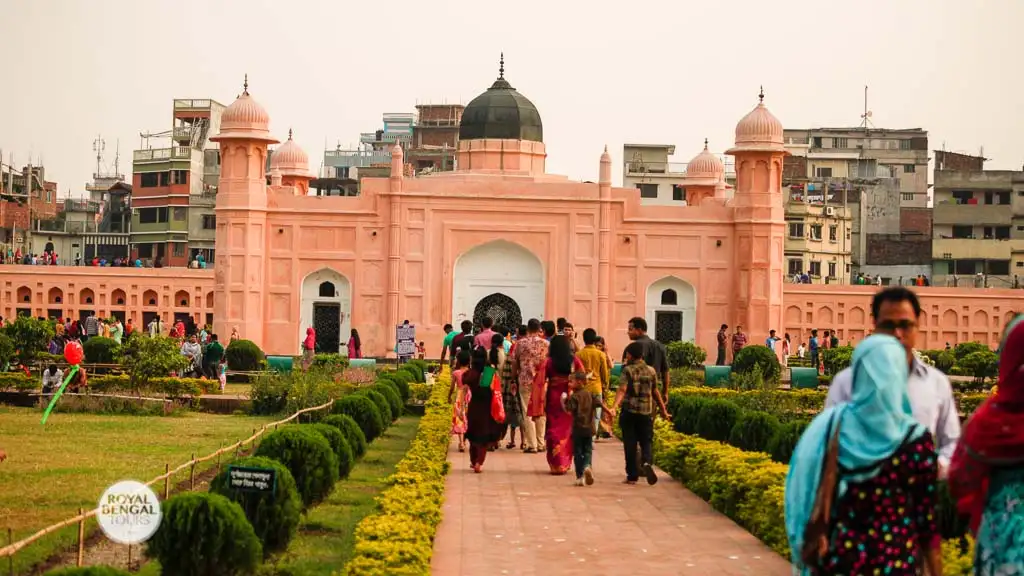
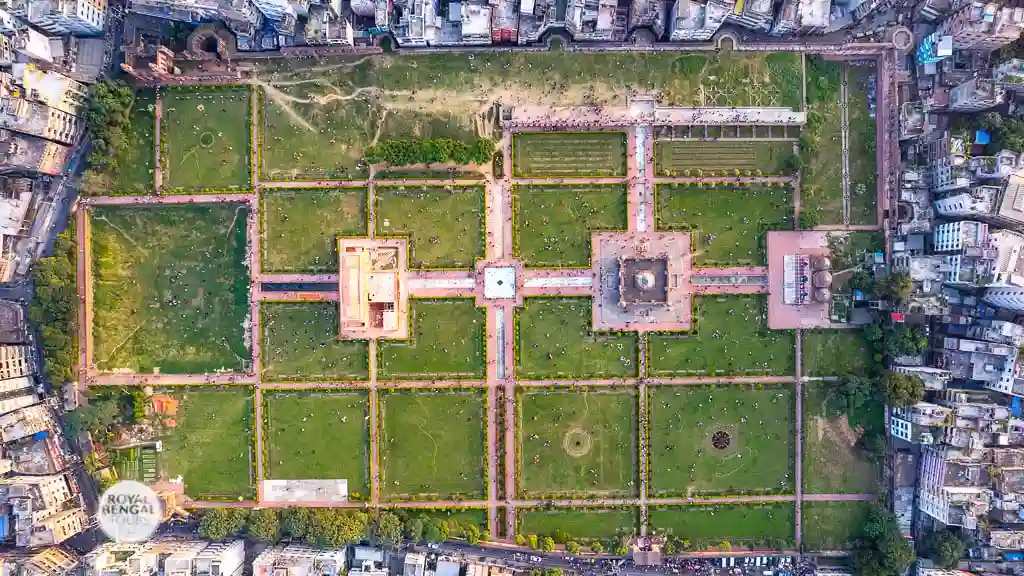
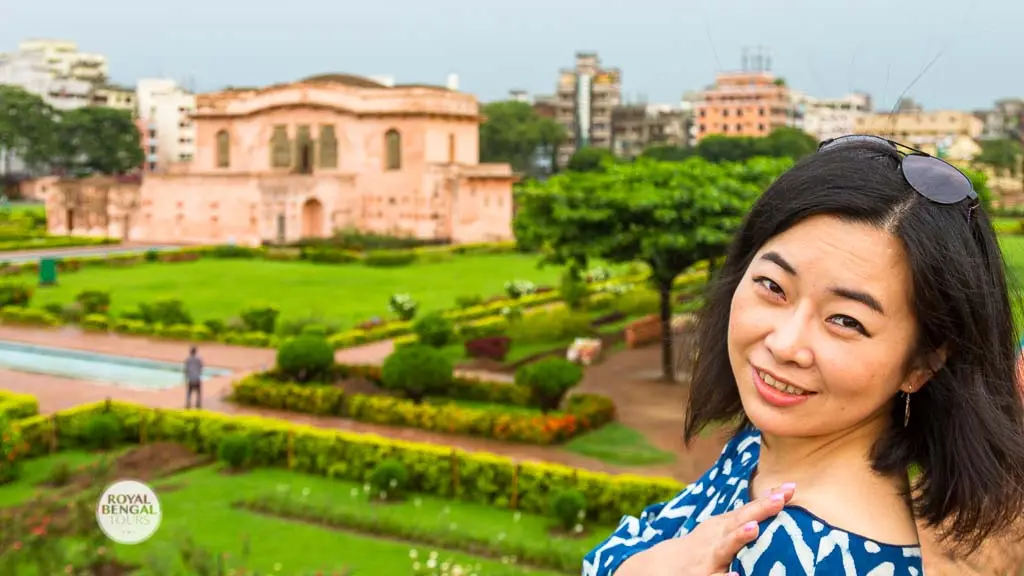
I booked the Old Dhaka tour last minute, as I was concluding my business trip and didn’t have a lot of other time to see the city. As a solo female traveller, I was hesitant at first and not sure of what to expect. My tour guide and driver were very kind and professional, and I greatly enjoyed their company. The tour guide was a young university student, who spoke very good English and was very knowledgeable and eager to share his city. I don’t recall the names of all the places we visited, but we went to the bustling market in the morning, walked around the university campus, visited the new market and watched artists sew and stamp fabrics, stopped for lunch and tasted different mashed vegetable dishes, and in the afternoon visited some historic sites: the pink buildings in a garden, the pink palace, the Armenian church, a Hindu temple, a mosque, and we also visited the riverfront and walked around one of the big ferries. I decided not to go on a riverboat ride, but we did ride a few rickshaws which were quite fun actually, despite the hectic traffic and the absolutely crazy city streets. Thank you very much for an interesting cultural experience! And a big thank you to my guide. It was a pleasure to talk to a friendly local, and learn more about the culture of Dhaka.
Joshua W
Excellent tour. Great logistics. Great people.
Royal Bengal Tours is great. I 100% recommend them. My wife and I were visiting Bangladesh for the first time and had limited time for research and our visit. RBT’s Jewel was very responsive by e-mail, and made short-notice arrangements for us to visit the Parliament complex. Mithu, our guide, was all-around excellent. He was friendly, very informative and knowledgable, a good communicator, and very adaptable to our needs. He provided many insights about the country, city, and people. After beginning our tour, we realized that we had some different priorities concerning what to see, and Mithu adapted our itinerary wonderfully.
We took a full day tour. There was some walking. The Parliament building was very interesting. Old Dhaka was busy, chaotic, full of sights and sounds and smells. Traffic was horrible in the afternoon, so be prepared to sit in grid lock sometimes.
V6696YOvanessap | Corner Brook, Canada
Brilliant half-day intro to Old Dhaka!
I can’t say enough good about our tour guide Jewel. He was so organized and kind and knowledgable about every detail (and welcomed aaaall our questions). He even fit us in at the last minute. We learned SO much and got a (literal) delicious taste of the market. You’ll tour through places you never could find on your own. Lots of walking and be prepared for many different smells! Great option if you can’t fit in a full-day experience. You haven’t really seen Dhaka until you do this tour! Thank you Royal Bengal Tours! You made my visit!
Lukas W.
Tours to Old Dhaka and Sonargaon
When I was searching for a guide who could show me around Old Dhaka, a friend recommended me Jewel as a guide. Since our first tour I booked several tours with Jewel for showing around colleagues during a business trip or my family.
In December 2019 me and my family had two amazing tours with Afridi, a colleague of Jewel to Old Dhaka and Sonargaon.
When preparing the tours both Jewel and Afridi have been very flexible in the plans of what to visit. After my first visit, I had an overview of places I like to visit or to show others. It is easy to discuss these wishes with both of them and they provide also own ideas and estimations on starting and ending time, as well as the length of the tours. I always had my personal driver, so we agreed on a meeting point and picked the guide up. Most places are not in a walking distance, so a car is always needed.
During the tours, Jewel and Afridi always had an eye on us, the safety of the routes to go and possible discoveries along our routes. Jewel lived for some time in Old Dhaka and therefore knows the people, the authentic places to stop for tea or mishti (sweets) and the way through the tiny streets.
If it is a day drip, Jewel and Afridi know clean restaurants for lunch in all places I visited together with them.
All in all, the trips have been greatly organized and allow a lot of modifications during the tours and the beforehand planning. I would describe the trips as an introduction into the rich cultural everyday life of the general society in Dhaka. Sightseeing is also a part of the tours, but the focus – and where you can discover most things and get to know different daily routines – is the life of the people. Outside of Dhaka we visited a village on a river island and learned how life is organized there. Both Jewel and Afridi are awesome and knowledgeable guides and I hope to meet them both again when I am the next time at Dhaka.
sophiapG7072OJ
Amazing Tour of Old Dhaka!!!
Feb 2022
Jewel was an amazing tour guide, he took you to all the local places and gave such a rich history of Dhaka. I learned so much and saw everything on my bucket list! He was kind and funny, we had an amazing time. The all day tour of Old Dhaka is very recommended with Jewel!!!
CubaTraveler1 | Boston, Massachusetts
Amazing Experience in Old Dhaka
Jewel’s knowledge of Old Dhaka is extensive. He brought us to so many “hidden gems” that we never would have discovered on our own. Our group was a mix of Dhaka natives and Western visitors – all enjoyed the tour and learned a lot. Jewel’s photography is also an added bonus, he took many pictures, including of us, which he sent after the tour, he has a great eye! Highly recommend.
SassiAssi | Bremen, Germany
Brilliant Day Trip – extremely happy with everything
I have done a first trip with them couple of months ago. Was extremely happy. So I did another trip to Sonargaon with them for a day. Was very well organized, super kind and relaxed guide. Would absolutely recommend Royal Bengal Tours to anyone. Will not be my last trip.
lebasi89 | Brussels, Belgium
An absolutely fascinating tour through Old Dhaka
It was a pleasure to roam Dhaka with Jewel. We were around for more than 6h: the old market, university, around and on the river and many more. Jewel was extremely knowledgeable and it was absolutely fascinating to discuss country and people with him. I learned so much and I would advice it to everyone who seta foot in Dhaka to take a tour with him. I hope we’ll meet again soon!!
FellowTraveler609429 | Baltimore, Maryland
A wonderful, comprehensive tour of Dhaka!
We had a wonderful two-day tour of Dhaka with Jewel! He was knowledgeable, welcoming, and accommodating. We contacted Jewel because we wanted to see the inside of the Bangladesh National Parliament House. Not only did we get to see Louis Kahn’s masterpiece, but we got to see so much more.
From a small boat trip across the Meghna River, to a visit of the Museum of Independence to a walking tour of Old Dhaka, Jewel made sure we had a great experience. We fell in love with the Bangladeshi people and their vibrant culture. We had wonderful food along the way (note: we did not get sick), which culminated in a warm and delicious dinner with a local family. We can’t thank Jewel enough for his hospitality. We plan to come back to visit him and see more of Bangladesh!
zestfortravel2016 | Portland, Oregon
Overwhelming Bangladesh
We got to experience many sides of Bangladesh with Jewel, thé owner/guide of Royal Bengal Tours on our 6 day archeology tour. Bangladesh provides overwhelming and exhilarating experiences from walking through the market in Dhaka to just walking the streets to see all levels of society.
Jewel customized our tour to focus on both archeology and history as well as seeing ordinary rural experiences. He took us to the National Language Day celebration on February 21 which was not on the tour. We loved seeing the countless rice paddies, and visiting in the homes of villagers who warmly welcomed us. I learned the details about harvesting potatoes, sorting red chilies, processing rice, and making bricks by hand.
We enjoyed the boat ride on the mighty Ganges River.
We stayed in very nice hotels, partly from his concern for our health. He checked out restaurant kitchens to be sure we could safely dine in them. Thanks to Jewel we got to try a variety of local dishes in different types of restaurants. This was an unexpected highlight.
I have traveled with local guides in many countries. Jewel is top notch. He responded quickly to emails as we customized the basic 4 day archeology tour. We experienced so much, benefiting from his knowledge and passion for sharing about Bangladesh. I recommend his tours highly.